
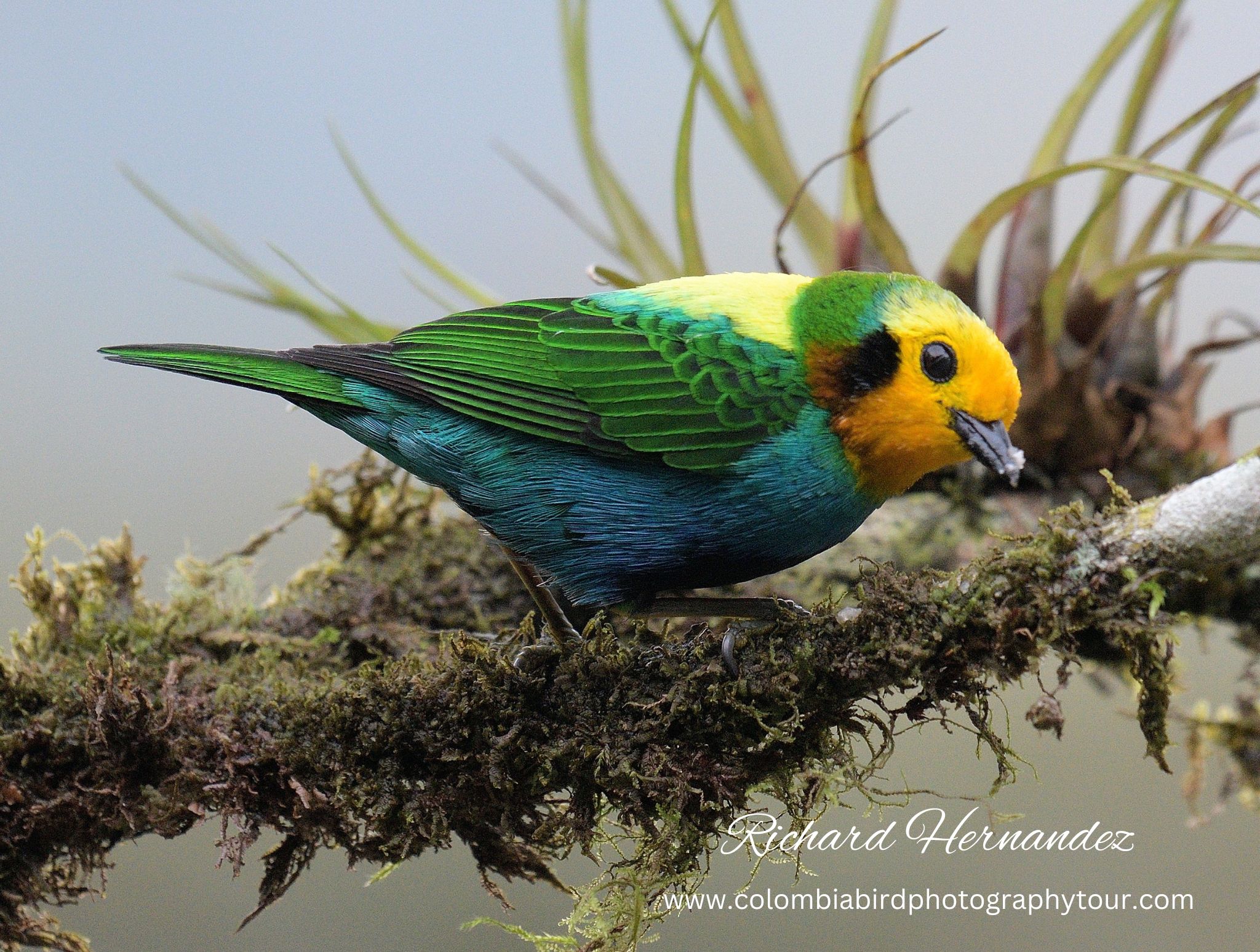
Multicolored tanager
It is endemic to the mountains of Colombia, and as of 2010 has been categorized as vulnerable by the IUCN.
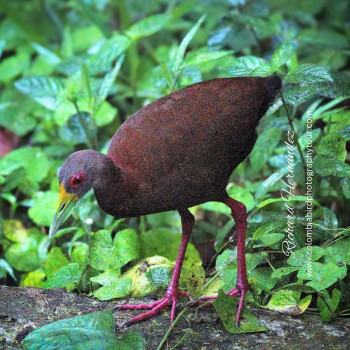
Brown wood rail
Large, chicken like bird of humid lowland and foothill forest in western Ecuador and western Colombia.
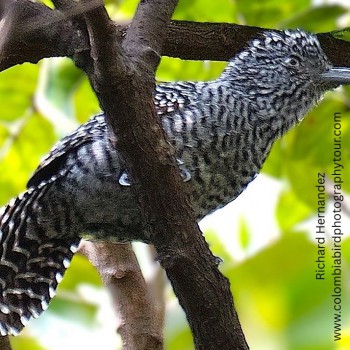
Bar crested antshrike
A shy bird. Male is barred black and white all over. Most often seen in pairs. Restricted to western Colombia.
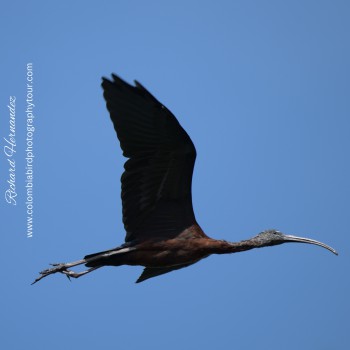
Glossy ibis
Long curved bill. Adults almost dark with iridescent green and reddish tones. Dark eyes.
Anaime Canyon
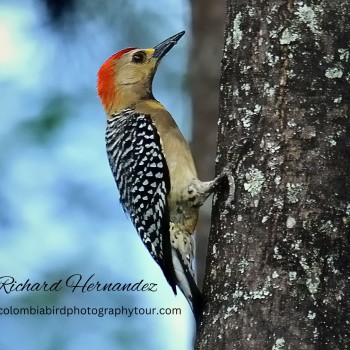
red crowned woodpecker
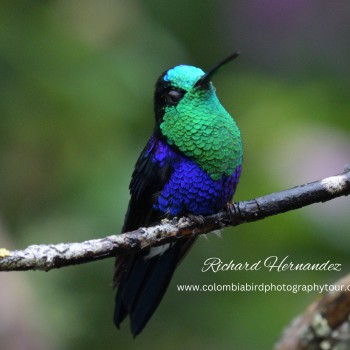
crowned woodnymph
glossy ibis
Cauca valley
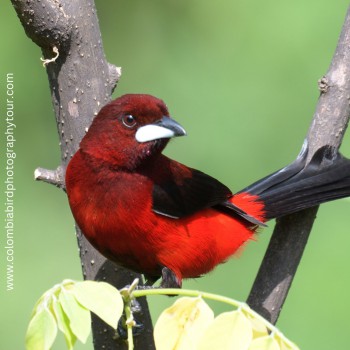
crimson backed tanager
bar crested antshrike
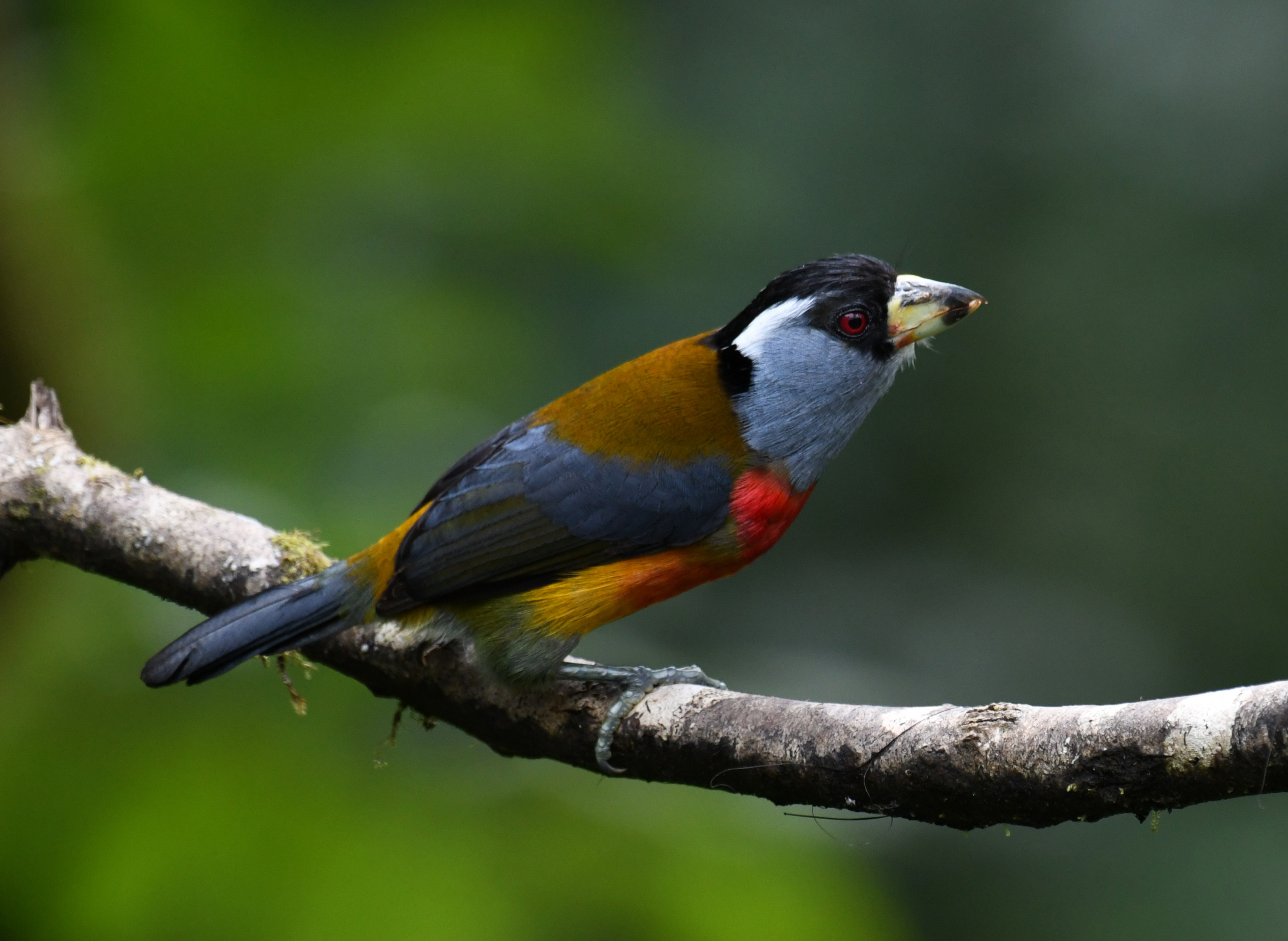
toucan barbet
Birding Colombia
Salento, in the departmento of Quindío, is located 36 km from Pereira. E11km East of Salento lies the Cocora valley, where wax palms, a national symbol, are home to rare parrots. The town serves as a gateway to the snow-capped peaks of Los Nevados National Natural Park to the northeast. The Mirador view point is located just northeast of the town.
Birds found in Salento yellow backed oriole, scarlet fronted parakeet, cauca guan, cattle tyrant, grayish piculet, red ruffed fruitcrow, tourmaline sunangel, buff necked ibis, yellow backed oriole, moustached puffbird.
Bird Photography Tours – from Bogota to Cali
Across diverse Colombian bird habitats, from high-altitude cloud forests to tropical wetlands. Bird photography tours Centered around Cali, this region is a global bird hotspot for neotropical endemic birds and vibrant mixed flocks.
Buga city – Departamento (province) of Cauca valley,
Anaime/Cajamarca- Departamento of Tolima,
Otun/Quimbaya Departamento de Risaralda,
Manizales del Departamento de Caldas,
Pereira Departamento de Risaralda.
Bird Photography tours focusing on hummingbirds, tanagers, and motmots in the Andes and Caribbean regions. Specializes in small-group, all-inclusive photography experiences. Richard Hernandez Birding & Photo Tours offer personalized, expert-guided tours based on over 25 years of experience.
Top Birdwatching Routes in Colombia 2026
Central and Western Andes, a hotspot for high-mountain species: Buffy Helmetcrest, Yellow-eared Parrot.
Sierra Nevada de Santa Marta: a unique center of endemism where you can observe: Santa Marta Parakeet, Santa Marta Hummingbird.
Chocó Region, famous for its high rainfall and colorful birds: Multicolored Tanager.
The Amazon and Llanos offer deep jungle experiences and bird photography in search of species such as the Harpy Eagle.
SIERRA NEVADA DE SANTA MARTA – BIRDING IN COLOMBIA
The Sierra Nevada de Santa Marta is a mountain range in Colombia that forms a distinct system separate from the Andes mountain range, located on Colombia’s Caribbean coast. It rises abruptly from the Caribbean Sea to reach snow-capped peaks at an altitude of 5,775 meters.
The Sierra Nevada de Santa Marta is located in the far north of Colombia, in the Caribbean region, and extends across the departments of Magdalena, Cesar, and La Guajira. It is a mountain massif completely independent of the Andes, making it one of the most unique geological formations in the country and the continent. UNESCO declared it a biosphere reserve in 1979, given the network of ecosystems that harbor countless life forms.
The Sierra Nevada de Santa Marta boasts extraordinary biodiversity, to the point of being considered one of the most biodiverse areas in the world. The fauna is also abundant, especially birds, with more than 600 species recorded. Due to this impressive biological diversity, UNESCO declared the region a biosphere reserve and a World Heritage Site in 1979. The Sierra de Santa Marta has 631 species of birds, representing 35.45% of Colombia’s birds and 7% of the world’s; 51 of these are migratory species.
RESERVA EL DORADO BIRDING – SANTA MARTA
The ProAves El Dorado Reserve was created on March 31, 2006, based on the urgent need to conserve one of Colombia’s most fragile and important sites, the Sierra Nevada de Santa Marta. The Reserve is located on the Cuchilla de San Lorenzo ridge, in the western sector of the northern slope of the Sierra Nevada de Santa Marta, in the township of Minca, belonging to the municipality of Santa Marta, Magdalena department. It currently covers an area of 1,024 hectares, at an altitude ranging from 950 to 2,600 meters.
It is home to three of the most threatened bird species of the Sierra Nevada de Santa Marta: the Santa Marta Parakeet (Pyrrhura viridicata), the Santa Marta Flycatcher (Myiotheretes pernix), and the Santa Marta Sabrewing (Campylopterus phainopeplus), as well as more than 40 species of migratory birds.
MINCA BIRDING – SANTA MARTA
Minca is the ecological capital of the Sierra Nevada de Santa Marta. It boasts a tropical rainforest with towering trees—up to 40 meters tall—and diverse species. Located at an altitude of approximately 650 meters in the Sierra Nevada de Santa Marta (40 minutes from Santa Marta), Minca is known as the ecological capital of the region.
Minca is situated in the foothills of the Sierra Nevada de Santa Marta, about 15 km from the city center. This township is located 21 km from the city of Santa Marta, Magdalena, and was once the settlement of the Tairona indigenous community.
It stands out for its cool climate, lush vegetation, waterfalls, rivers, coffee farms, and birdwatching, making it an ecotourism paradise. Minca is the perfect place to disconnect from the city and enjoy nature on the world’s highest coastal mountain range.
Bird Photography Tours – from Bogota to Barranquilla
Barranquilla city – Departamento (province) of Atlantico,
Minca – Departamento of El Magdalena,
Riohacha Departamento of La Guajira,
08 DAYS BIRDING COLOMBIA – NORTHERN PART – THE CARIBBEAN
Northern (Caribbean) Colombia Birding Circuit
ARRIVAL DAY
Arrival in Barranquilla at Ernesto Cortissoz International Airport from Bogotá
(Overnight in Barranquilla)
Note: If your arrival day is listed, it will be during daylight hours. We will begin the tour from the time you arrive in Barranquilla.
DAY 1 BARRANQUILLA – MINCA
We begin by heading towards the Malecón del Río (Riverfront Boardwalk) in search of the Northern Screamer, Limpkin Large-billed Tern, and Lesser Yellow-headed Vulture.
Then we continue to Kilometer 4, stopping for breakfast. In this area, we will search for the Caribbean Hornero, Turquoise-winged Parrotlet, Brown-throated Parakeet, Glaucous Tanager, and Spot-breasted Woodpecker.
We continue to Salamanca Island National Natural Park where we will have the opportunity to search for the Sapphire-throated Hummingbird, Sapphire-bellied Hummingbird, Bicolored Conebill, Bare-throated Tiger-Heron, Spotted Sandpiper, and Solitary Sandpiper.
Continuing our journey to Minca, we will stop for lunch along the way. After lunch, we will visit a location to try for the Chestnut-winged Chachalaca, Rufous-tailed Jacamar, and Whooping Motmot.
Arrival in Minca, rest at the hotel. Overnight in Minca.
DAY 2: MINCA
Taking advantage of the morning, we depart for Las Cabañas in search of the Black-backed Antshrike, Military Macaw, White-bearded Manakin, Lance-tailed Manakin, and Golden-winged Macaw. Sparrow.
In the afternoon, we’ll take a different trail to find some common species.
Overnight in Minca.
DAY 3 MINCA – BELLA VISTA
We’ll have breakfast at the hotel and then head out to look for the first endemic species and subspecies of the lower elevations, such as the Santa Marta Antbird, Santa Marta Tapaculo, Santa Marta Brushfinch, Sierra Nevada Brushfinch, White-lored Warbler, Rusty-breasted Antpitta, Bay-headed Tanager, Black-headed Tanager, Coppery Emerald, Santa Marta Woodstar, and Santa Marta Blossomcrown.
Arrival and lunch at the hotel. In the afternoon, we’ll head out to try and spot some of the species we saw in the morning, and at nightfall, we’ll search for the Santa Marta Screech-Owl.
Overnight in Bella Vista
DAY 4 BELLA VISTA – SAN LORENZO
This day begins very early with an ascent to the highest part of the mountain range in search of high-altitude subspecies, near-endemic birds, and endemic species such as: Santa Marta Parakeet, Santa Marta Warbler, Black-cheeked Mountain Tanager, Hermit Wood-Wren, Yellow-crowned Redstart, Santa Marta Bush-Tyrant, Santa Marta Antpitta, Sierra Nevada Antpitta, White-tailed Starfrontlet, and White-tipped Quetzal.
Free afternoon. Since we started very early, the afternoon will be for resting.
Overnight in Bella Vista
DAY 5 BELLA VISTA – MINCA
Breakfast at the hotel, then we’ll begin our descent, searching for the species we missed on the way up, until we reach Minca. Lunch in Minca. In the afternoon, we’ll take a walk near the hotel.
Night in Minca
DAY 6 MINCA – TAYRONA – RIOHACHA
Departure for Tayrona National Park in the morning, with a focus on primates and some birds such as the manakins mentioned earlier and on day 2. We may also spot the Blue-billed Curassow, although it is a very elusive and difficult species to see; sometimes we have the opportunity to find it.
Then we continue to Riohacha, stopping for lunch along the way. Afterward, we will visit Camarones, where we will have the opportunity to observe aquatic birds. (We will spend the afternoon at the lagoon.)
Night in Camarones
DAY 7 CAMARONES OR RIOHACHA – ALMIRANTE PADILLA INTERNATIONAL AIRPORT IN RIOHACHA
In the morning, we’ll explore the forest near Camarones, searching for Vermilion Cardinal, Orinocan Saltator, Chestnut Piculet, Tocuyo Sparrow, White-whiskered Spinetail, Buffy Hummingbird, Green-rumped Parrotlet, Rufous-vented Chachalaca, and Double-striped Thick-knee.
After lunch, we’ll return to the airport Riohacha, flight to Bogota
(This day’s itinerary depends on your flight schedule.)
TOUR PRICE USD. 4,722 per one person
TOUR PRICE USD. 3,438 per person based on two
TOUR PRICE USD. 2,860 per person based on three
TOUR PRICE USD. 2,935 per person based on four
-Flight Bogota-Barranquilla
-Flight Riohacha-Bogota
-All meals
-06 night Hotel accommodations
-Ground Transportation
-English speaking bird guide
-Local guides
DOES NOT INCLUDE:
–alcoholic drinks
-Bogota hotel nights
-tips