
Cali
Cali, officially Santiago de Cali, is a district of Colombia and the capital of the Valle del Cauca department. It is the third most populous city and the third largest economic center in Colombia. Cali is known as the world capital of salsa. The location within the Cauca Valley, the climate and the terrain, make the city a place of great natural wealth, elevation of 1,000m. Wikipedia
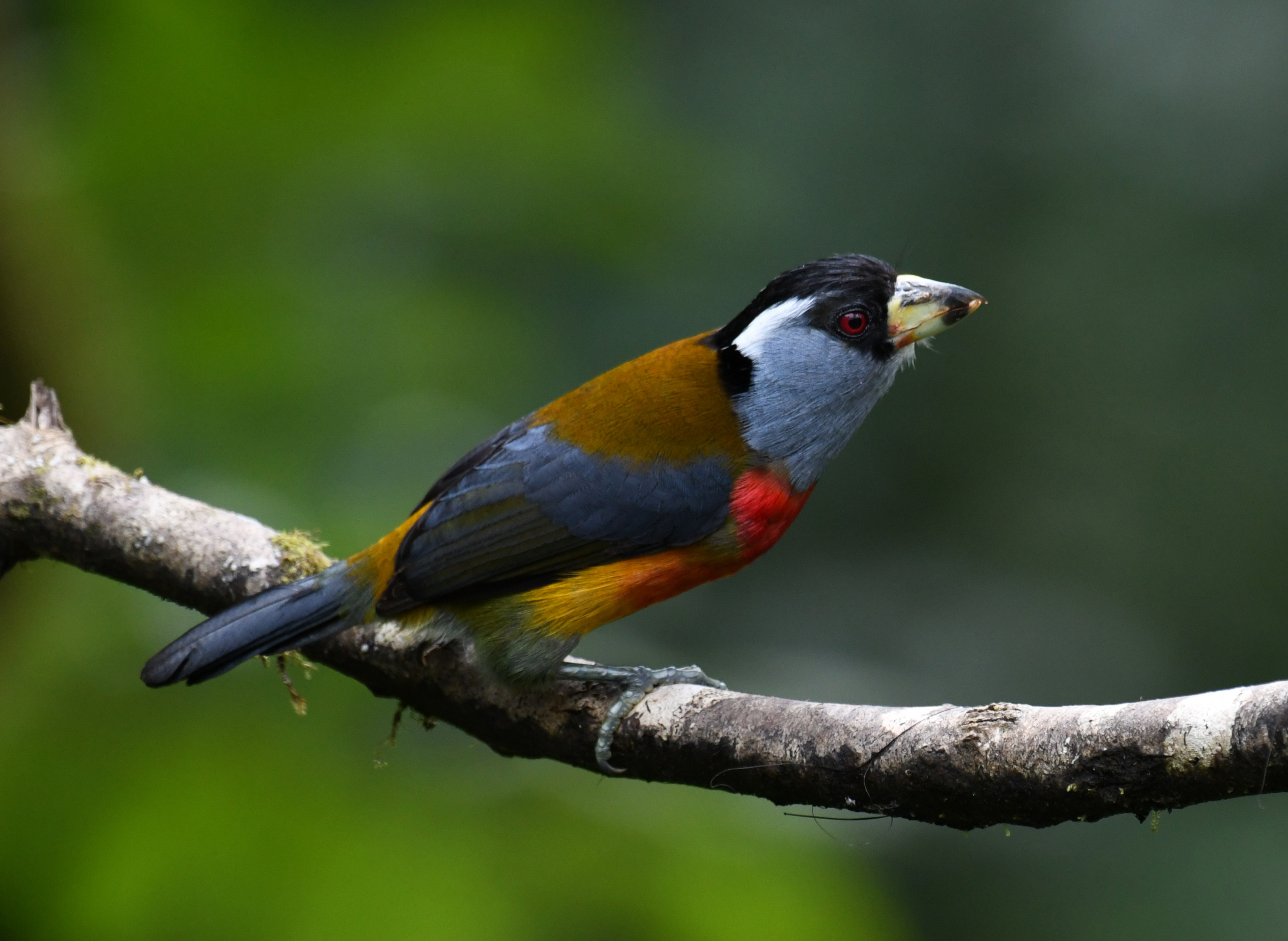
Buga
Buga formally Guadalajara de Buga, is a city in the Valle del Cauca Department of Colombia. It is famous for its Basilica del Señor de los Milagros. Buga is a city with a cattle industry. It is located 46 mi (74 km) from Cali. It has a population of approximately 127,547 inhabitants, according to the 2018 census. Wikipedia
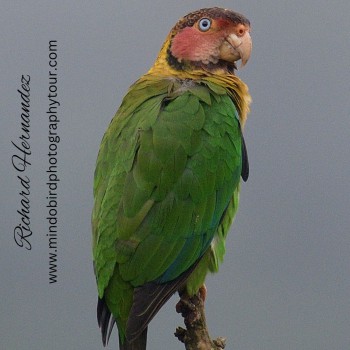
Cajamarca
Cajamarca is a town and municipality in the Tolima Department of Colombia. The population of the municipality was 17,309 as of the 2018 census.[1] The municipality has two populated centres, the town centre of Cajamarca and the locality of Anaime. It is located along the Pan-American Highway. Wikipedia
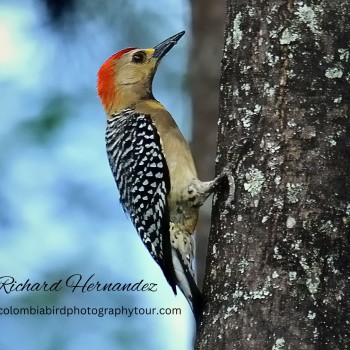
Pereira
Pereira is the capital city of the Colombian department of Risaralda. It is located in the foothills of the Andes in a coffee-producing area of Colombia. Among the orographic accidents are the snowcapped Quindio, Ruiz, and Santa Isabel, located in the limits with the departments of Caldas and Tolima respectively. Wikipedia
8 DAYS COLOMBIA BIRDS TOUR
The optimal seasons for capturing the untamed beauty of Colombia’s fauna lies primarily between the dry seasons, spanning December to March and then again from July to August. These months clearer skies, less precipitation, and consequently, more predictable animal behaviors and accessible terrains.
LUNCH, DINNER
LODGE: LA FLORIDA – EL BOSQUE DE LAS AVES, sector km 18, Cali, Valle del Cauca, Colombia.
BOSQUE DE NIEBLA BIRDING & NATURE
Arrival in Cali, Valle del Cauca Department (Alfonso Bonilla Aragón International
Airport). PM Birdwatching and nature, reception at the Cali airport, then transfer to
the Km 18 area, 45 km away, an hour and a half drive, part of the reserve.
Bosque de Niebla Birding & Nature opened its doors to bird and nature lovers, one
of the best sites for birdwatching and photography in southwestern Colombia. It is
located at Km 18 at an altitude of 2,000 meters above sea level in an Andean forest
ecosystem, home to approximately 360 birds. To date, more than 260 bird species
have been registered on the e-bird platform, including 5 endemic species: the
multicolored tanager, chestnut wood quail, Colombian chacalaca, grayish piculet,
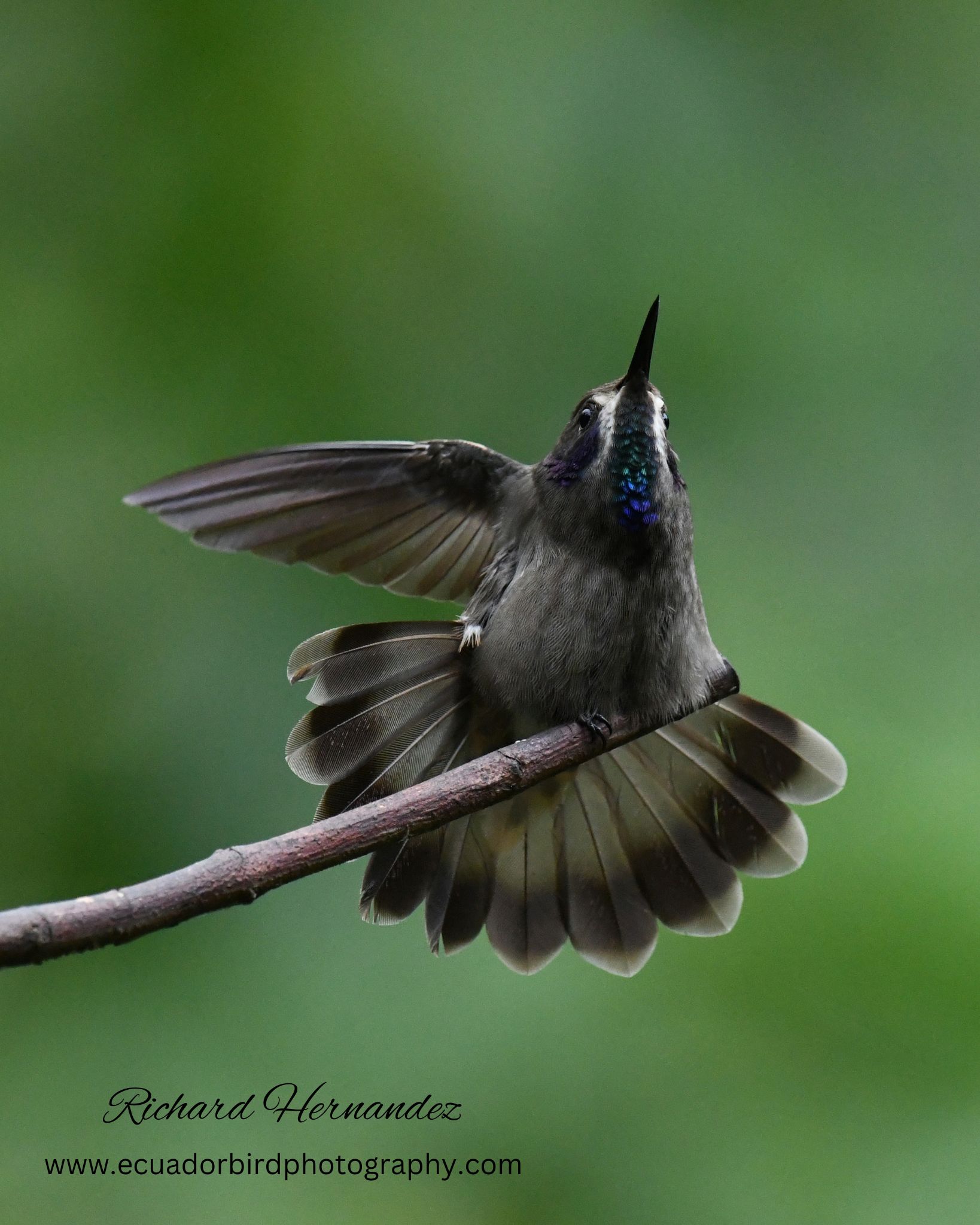
and apical flycatcher. Others: Chestnut Wood-Quail, Multicolored Tanager, Purple
throated Woodstar, White-booted Racket-tail, Gray-breasted Wood-Wren
NIGHTWALK
Tropical Screech-Owl (Megascops choliba) – Currucutú
Rufescent Screech-Owl (Megascops ingens) – Large Scops Owl
Spectacled Owl (Pulsatrix perspicillata) – Spectacled Owl
Mottled Owl (Strix virgata) – Spotted owl
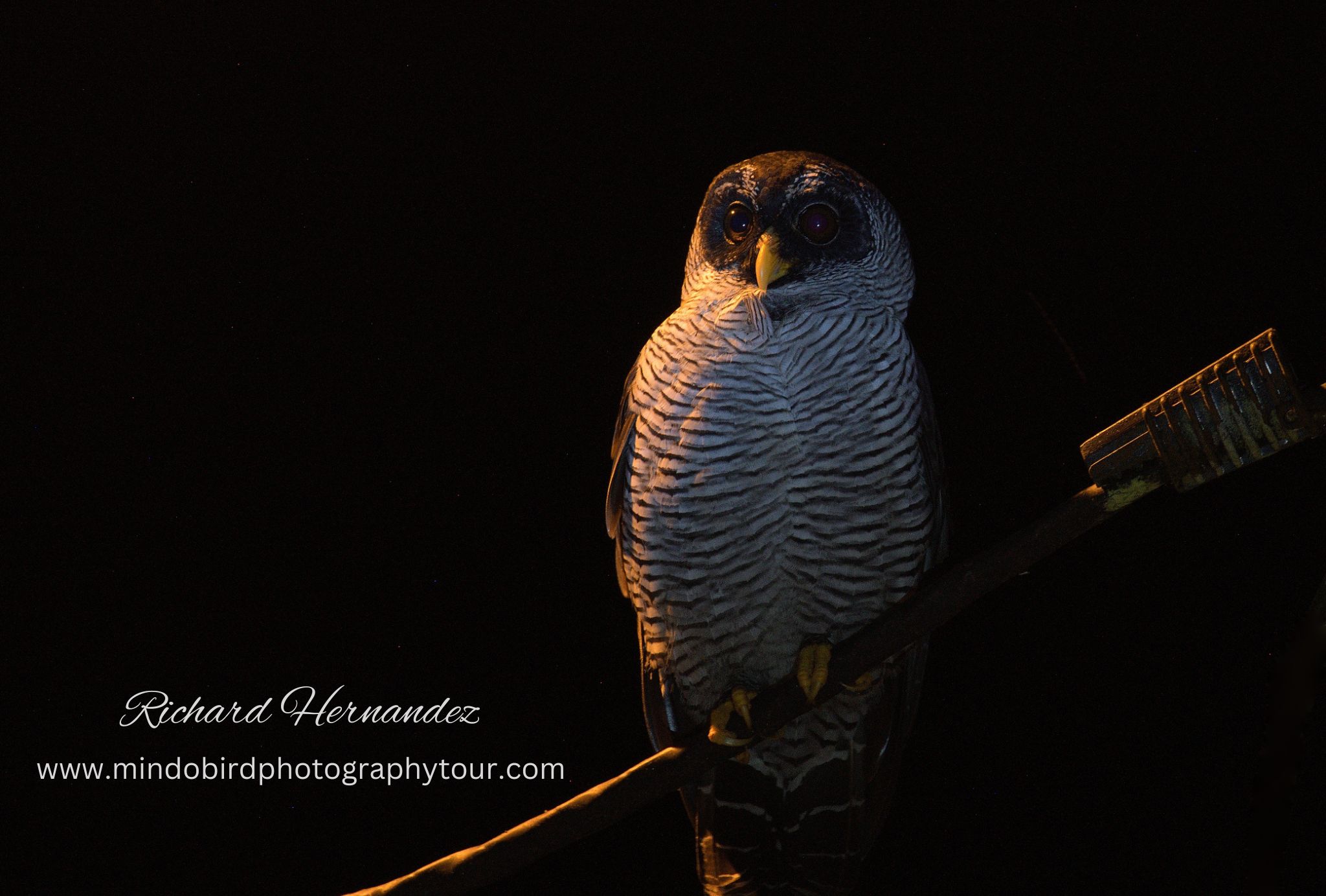
Black-and-white Owl (Strix nigrolineata) – Black-faced owl
Day 2: KM18 CALI. CLOUD FOREST AND LA FLORIDA (EL CAUCA)
BREAKFAST, LUNCH, DINNER
LODGE: ECOHOTEL EL DIAMANTE – located in La María, 10 minutes from Buga Valle del Cauca and 1 hour from Alfonso Bonilla Aragon International Airport in Palmira.
LA FLORIDA BIRDING
La Florida Birding is known for being home to the elusive Red-legged Partridge and
the incredible Multicolored Tanager (Chlorochrysa nitidissima), two captivating
birds endemic to Colombia. Here, you’ll have the opportunity to take stunning
photographs, as our birdwatching site has more than 340 recorded bird species,
including 24 varieties of hummingbirds and up to 30 species of tanagers. We are
committed to providing the best facilities for bird photography.
Day 3: EL DIAMANTE (969 m elevation) AND SONSO LAGOON (850 m elevation)
BREAKFAST, LUNCH, DINNER
LODGE: CAJAMARCA OR SIMILAR
SONSO LAGOON (Buga, Cauca River) is 40 km from Cali. Anaime is 178 km away
from Sonso Lagoon, in the department of Tolima.
Sonso Lagoon, located in the Cauca Valley, Colombia, does not have any bird
species endemic to that specific location, but it is home to a great diversity of
birds, including migratory and resident species, that can be observed in the
wetland.
AM – SONSO LAGOON Birdwatching.
Early in the morning, we will visit Sonso Lagoon or Chircal (altitude: 930 m), the
largest wetland in southwestern Colombia. This site has been designated an
Important Bird Area (IBA) by Birdlife International. In addition to the wide variety of
waterfowl, we will look for iconic species.
BIRDS:
Congregatory: Neotropic cormorant, barred-faced ibis, fulvous whistling duck,
black-bellied whistling duck, Brazilian teal, blue-winged teal, cinnamon teal.
Endemic: Grayish piculet, apical flycatcher, turquoise dacnis, crested ant tanager,
scrub tanager, bar-crested antshrike.
Migratory:
Belted kingfisher, green kingfisher, amazon kingfisher, ringed kingfisher, large billed
tern, black skimmer, franklin’s gull, laughing gull, yellow billed tern, black necked
stilt, wilson’s phalarope, wilson’s snipe, giant snipe, short billed dowitcher, baird’s
sandpiper, stilt sandpiper, western sandpiper, pectoral sandpiper, buff breasted
sandpiper, solitary sandpiper, spotted sandpiper, least sandpiper, lesser
yellowlegs, greater yellowlegs, sanderling, killdeer, semipalmated plover, american
golden plover, collared plover, wilson’s plover, southern lapwing, sungrebe, wattled
jacana, moorhen, gray breasted crake, ash throated crake, sora, blackish rail,
spotted rail, purple gallinule, american coot, limpkin, muscovy duck, comb duck,
masked duck, white faced whistling duck, american wigeon, yellow billed pintail,
northern shoveler, southern pochard, northern cinnamon teal, tropical cinnamon
teal, blue winged teal, horned screamer, roseate spoonbill, buff necked ibis, white
ibis, scarlet ibis, glossy ibis, bare faced ibis, jabiru, Wood stork, yellow crowned
night heron, Little blue heron, pinnated bittern, tricolored heron, black crowned
night heron, straited heron, green heron, cocoi heron, great blue heron, least
bittern, cattle egret, snowy egret, great egret, anhinga, pied billed grebe, ruddy
turnstone, whimbrel.
Day 4: ANAIME CANYON + RETURN OF THE HUMMINGBIRD
BREAKFAST, LUNCH, DINNER
LODGE: EL CEDRAL LODGE (PEREIRA 1,411 M) OR SIMILAR.
ANAIME CANYON (Cajamarca 1,814 m, Tolima 1,814 m elevation, Anaime 1,300 m
elevation)
AM – WAXPALM FOREST, La Tribuna Farm
We will enjoy one of the most emblematic forests of the Colombian Andes: the wax
palm forest. Due to its special characteristics, this palm species was declared the
national tree of Colombia (Law 61, 1985). We’ll need to be ready by 5 a.m. to head
to the mountaintops, where hundreds of palm trees survive in grasslands and
remnants of forest. This area is considered home to the Yellow-eared Parrot
(Ognorhynchus icterotis), an endemic bird species that is also vulnerable to
extinction. Weather permitting, you’ll be able to observe the Nevado del Tolima
volcano.
PM – RETURN OF THE HUMMINGBIRDS Nature Reserve
We begin our experience by arriving in Anaime, a small town decorated with murals
dedicated to the biodiversity surrounding the region. Taking a rural road, we head
into the mountains. Our first stop will be the nature reserve, where we’ll learn
about the history of the territory’s protection, narrated by our local guide. In the
late afternoon, we’ll visit the wax palm forests about 10 km from the reserve, in
search of some parrot species, and then head to our resting place.
Day 5: OTUN QUIMBAYA RIVER BASIN 16KM from Pereira
BREAKFAST, LUNCH, DINNER
LODGE: HACIENDA EL BOSQUEat 2,578m (16KM from Manizales) or similar.
OTUN RIVER BASIN Otún River Basin 3,950m elevation (Risaralda Department)
AM/PM – OTUN QUIMBAYA FLORA AND FAUNA SANCTUARY
This National Natural Park is located 2,000 meters above sea level, with a cold and
rainy climate. A local guide accompanies us for about 2 hours to discover the green
surroundings of our lodge. We then take our time to try to spot local species in the
garden or from the observation tower.
One of the most sought-after species in Otún-Quimbaya is the endemic and rare
Cauca Guan. This magnificent bird, with its striking plumage and distinctive call, is
a true symbol of the region’s unique biodiversity. Otún-Quimbaya has rightfully
earned its reputation as a premier birding destination. Otún-Quimbaya is also
home to a host of other restricted-range birds, including the endemic Crested Ant
tanager, Stile’s Tapaculo, and Multicolored Tanager. These elusive creatures add to
the allure of this birding paradise, attracting birdwatchers from around the globe.
Otún-Quimbaya is also home to a host of other restricted-range birds, including
the endemic Crested Ant-tanager, Stile’s Tapaculo, and Multicolored Tanager.
These elusive creatures add to the allure of this birding paradise, attracting
birdwatchers from around the globe. Birdwatching enthusiasts can also keep an
eye out for the Grayish Piculet, The area also boasts a thriving population of the
Venezuelan Red Owler Monkey (Alouatta seniculus), adding another dimension to
the wildlife encounters in Otún-Quimbaya.
Day 6: HACIENDA EL BOSQUE (Caldas-Cauca valley) – PARAMO – TERMALES
DEL RUIZ 36KM from Manizales, 3500m elevation
BREAKFAST, LUNCH, DINNER
LODGE: EL PARAISO OR SIMILAR. Termales del Ruiz hotel
HACIENDA EL BOSQUE via Magdalena. 17KM from Manizales.
Hacienda El Bosque has 2 locations for Antpittas: Equatorial Antpitta and
Crescent-faced Antpitta and a feeder for the Grey-breasted Mountain-Toucan. You
can also find several feeders for hummingbirds such as Purple-backed Thornbill,
Sword-billed Hummingbird, Tourmaline Sunangel, Shining Sunbeam and other
small birds. You can stay at the feeders or follow the small trails for birdwatching.
Antpittas, where two species can be observed: the Equatorial Antpitta and the
extremely rare Crescent-faced Antpitta. This location is the only place within its
limited distribution, stretching from northern Ecuador to Colombia, where the
Crescent-faced Antpitta can be spotted. Subsequently, a feeding station for the
Grey-breasted Mountain-toucan was established, and this charismatic bird has
become a regular visitor. Other species of interest include the Barred Fruiteater,
Andean Guan, White-throated Quail-dove, and a numerous family of Hooded
Mountain-tanager. Hacienda El Bosque also features several cabins with the best
views of the mountains and a welcoming restaurant serving both guests and
visitors
PÁRAMO DEL RUÍZ 36KM from Manizales.
Get to know the ecosystem near the Nevado del Ruiz Volcano (altitude 4100
meters above sea level, cold climate). Very early in the morning, we will head to the
páramo, a unique ecosystem in the Andes, home to very unique species such as
the endemic Buffy Helmetcrest Hummingbird (Oxypogon stuebelii), and the
possibility of seeing the Andean Condor (Vultur gryphus), the Scarlet-bellied
Mountain Tanager (Anisognathus igniventris), and the Brilliant Sunbeam
(Aglaeactis cupripennis).
Here, our goal will be to see and photograph the Southern Emerald Toucanet
(Aulacorhynchus albivitta). Although it is rare, we have a good chance of seeing it
at this site.
Los Nevados National Natural Park, where it is possible to photograph the
endemic Buffy Helmetcrest Hummingbird (Oxypogon stuebelii), which often
approaches the wildflowers in the area; here, patience and luck are paramount.
RUIZ THERMAL SPRINGS
Termales del Ruiz is located in the buffer zone of the Los Nevados National Natural
Park, at 3500 meters above sea level. The Caldas region is a great area for
birdwatching. 197 species of migratory birds arrive here, endemic and almost
endemic species of the high Andean region. Among the birds that you can see at
hotel Termales del Ruíz, the most notable are the following: Shining Sunbeam,
Grey-breasted Mountain-Toucan, Rainbow-bearded Thornbill, Buff-winged
Starfrontlet, Black-thighed Puffleg and Golden-fronted Redstart.
Day 7: MISTRATO (Risaralda Department)
BREAKFAST, LUNCH, DINNER
LODGE: EL PARAISO OR SIMILAR. Termales del Ruiz hotel
Mistrató is a municipality located northwest of Risaralda, which, due to its
geographic location, has a wide variety of bird species as it borders the Choco
biogeographic region. Observation sites are located along unpaved roads, making
it easy to observe species such as: Black- and Gold Tanager, Purplish-Mantled
Tanager, Glistening-Green Tanager, Rufous-Throated Tanager, Silver-Throated
Tanager, Golden-Hooded Tanager, Toucan Barbet, Lanceolated Monklet, Golden
Headed Quetzal, Violet-Tailed Sylph, Scaled Fruiteater, and Orange-Breasted
Fruiteater. Steely-vented Hummingbird
Bare-faced Ibis, Western Cattle-Egret, Grayish Piculet, Acorn Woodpecker (Acorn), Yellow-headed Caracara, Common Tody-Flycatcher, Yellow-bellied Elaenia, Golden-faced Tyrannulet (Golden-faced), Great Kiskadee, Rusty-margined Flycatcher, Streaked Flycatcher, Tropical Kingbird, Yellow-throated Vireo, Red-eyed Vireo, Black-billed Thrush (Drab), Thick-billed Euphonia, Orange-bellied Euphonia, Rufous-collared Sparrow (Rufous-collared), Tropical Parula (South American), Blackburnian Warbler, Flame-rumped Tanager, Crimson-backed Tanager, Blue-winged Mountain Tanager , Blue-gray Tanager, Palm Tanager, black-capped Tanager, Scrub Tanager, Blue-necked Tanager, Bay-headed Tanager, Golden Tanager (aurulenta Group), Turquoise Dacnis, Green Honeycreeper, Bananaquit (Continental), Black-winged Saltator.
Day 8: GUASIMO 1000m – PEREIRA AIRPORT
BREAKFAST, LUNCH
LODGE: NOT INCLUDED- END OF SERVICE
AM- GUASIMO 4KM from La Virginia. La Virginia is 23KM from Pereira.
This community reserve is located at 1000 m altitude in the Cauca river valley in
Colombia, close to the city of Pereira. It is part of a larger Integrated Management
District within the municipality of La Virginia. The reserve protects some of the last
remains of tropical dry broadleaf forests in this densely populated and heavily
interfered region. It is especially well-known for the high pollution of the
spectacular Golden-collared Manakin. Other interesting species include the
endemic Grayish Piculet and Apical Flycatcher.
The Guásimo Ecological Trail is a community reserve located in the Cauca River
Valley in Colombia, near Pereira. The trail is known for its importance for bird
watching and typical bird communities.
PM – Ready to go home.
Note: It’s important to check flight departure times and arrival at the airport early.
Airport: Matecaña International Airport, located in the city of Pereira